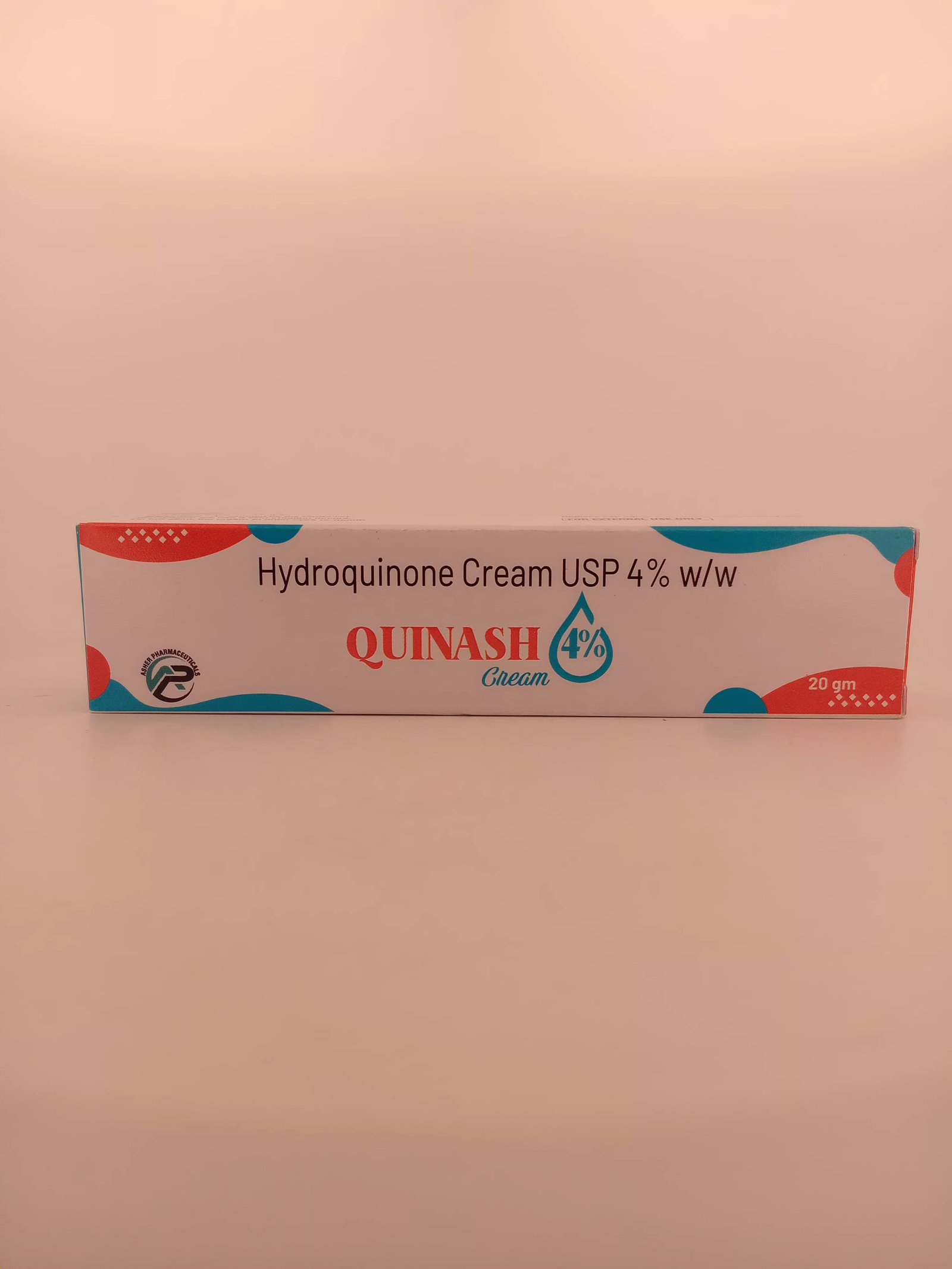
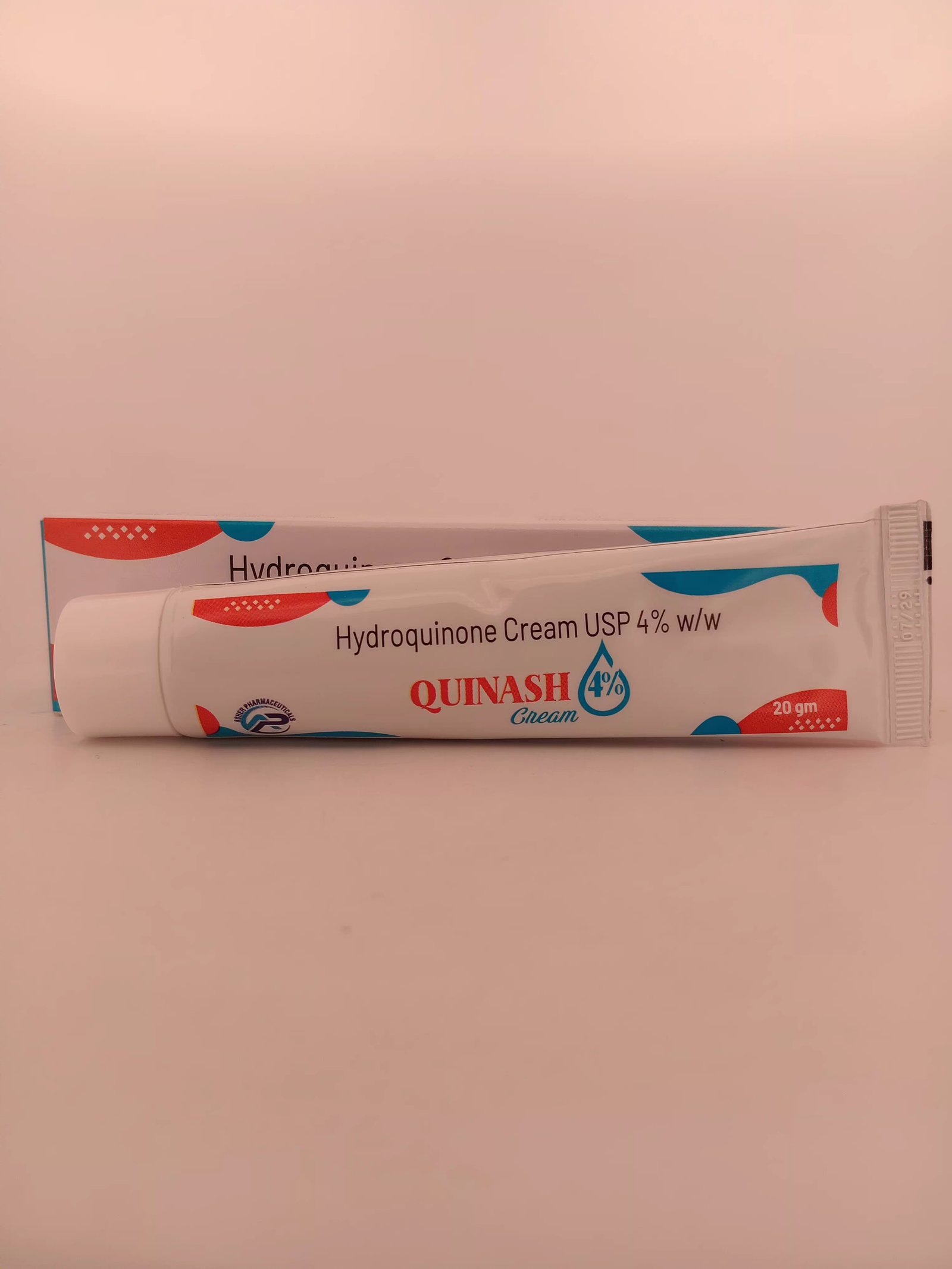
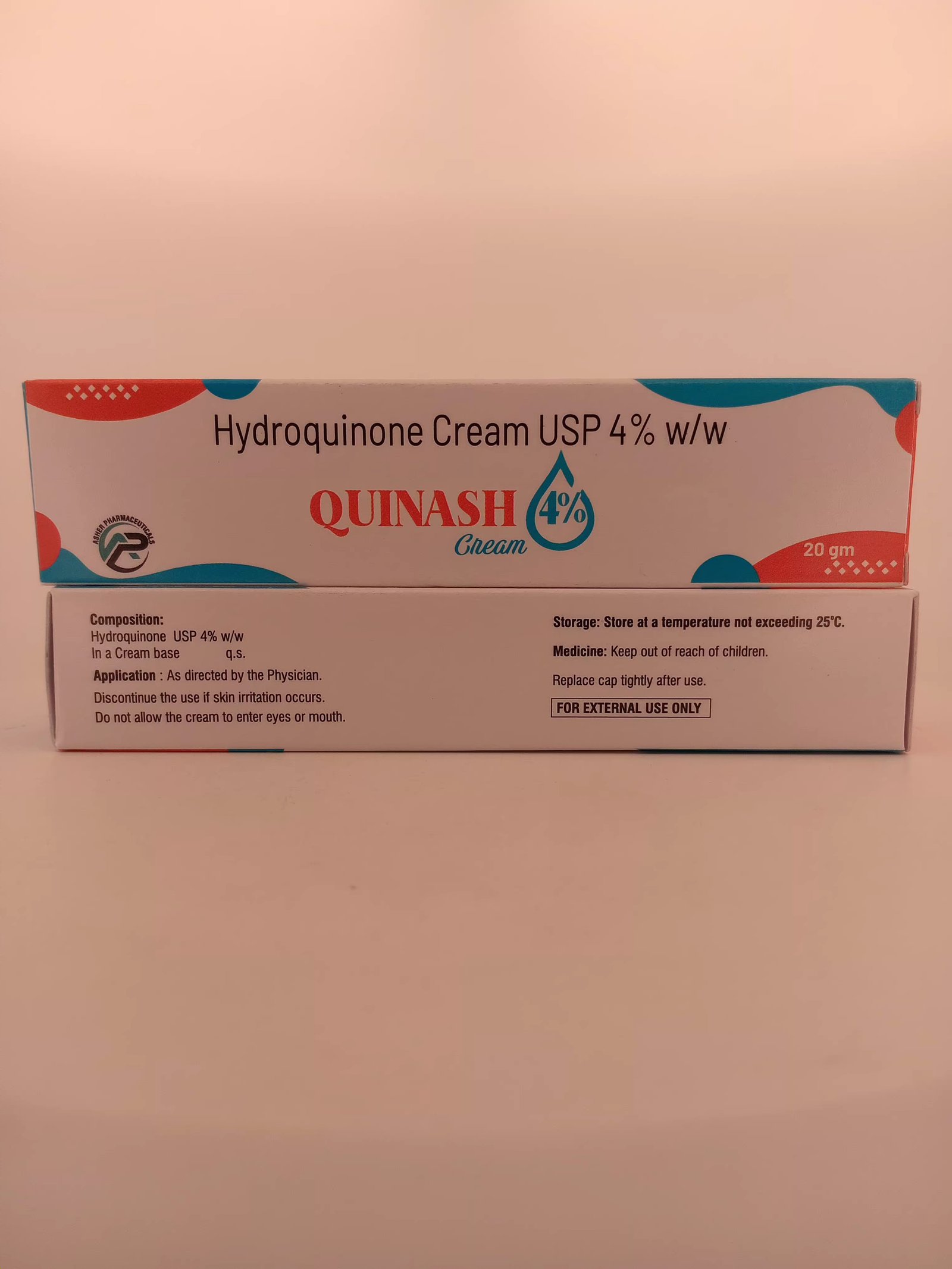
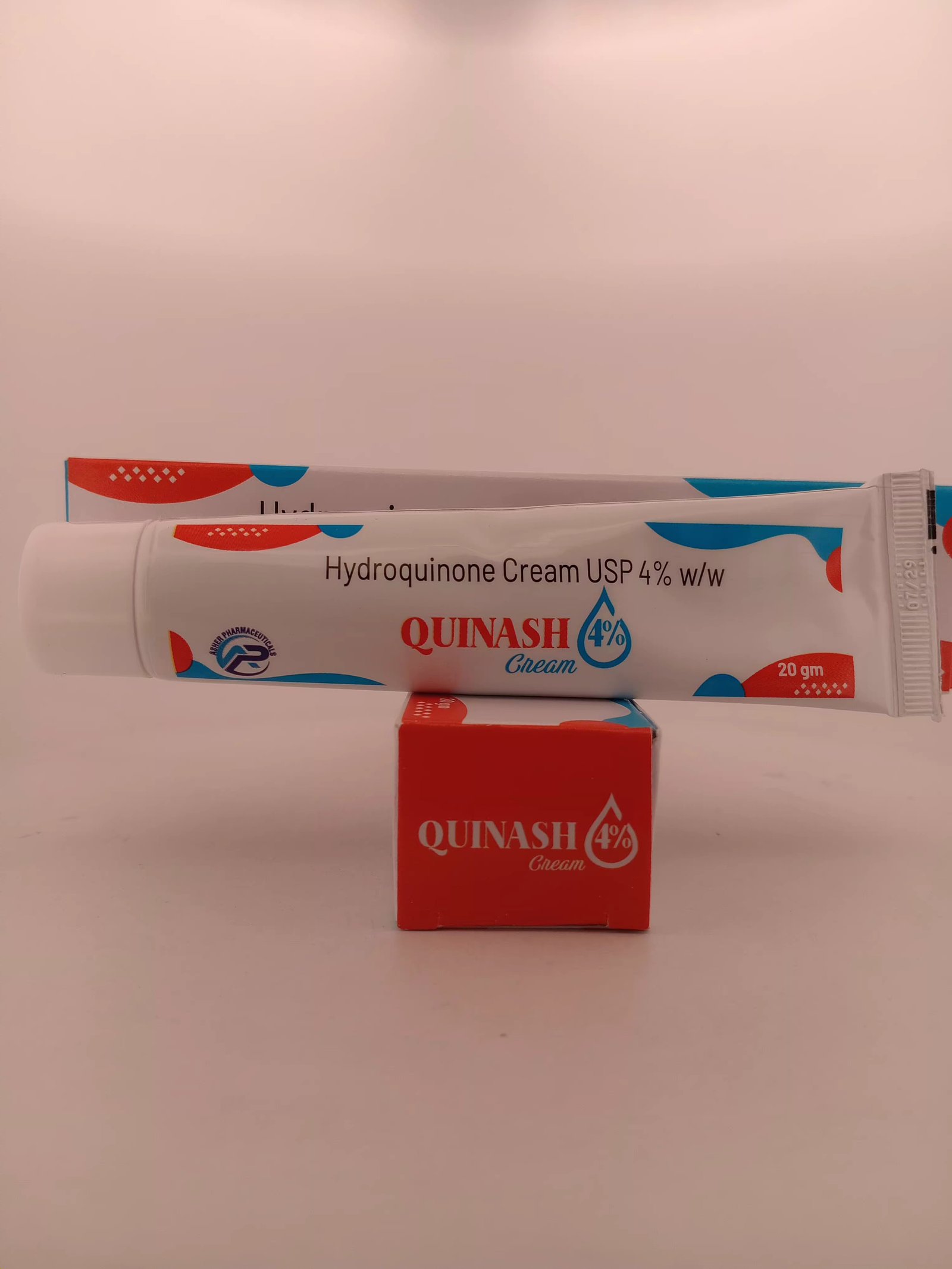
QUINASH 4% CREAM contains Hydroquinone 4% w/w, a topical depigmenting agent.
Hydroquinone belongs to the skin-lightening and depigmenting agent class.
It may be prescribed for certain hyperpigmentation conditions, including melasma and dark spots, under appropriate medical guidance.
The medicine works by inhibiting melanin production, which can gradually reduce excess pigmentation in treated areas.
Results vary depending on the cause and severity of pigmentation, skin type, and treatment duration.
Use the cream only according to the product instructions and advice of a qualified healthcare professional.
KEY BENEFITS:
Helps reduce the appearance of certain dark spots and hyperpigmentation.
May help improve the appearance of melasma when appropriately prescribed.
Helps reduce excess pigmentation in targeted skin areas.
May support a more even-looking skin tone.
Provides a topical treatment option for selected pigmentation disorders.
MECHANISM OF ACTION:
Hydroquinone acts as a depigmenting agent by inhibiting tyrosinase, an enzyme involved in melanin production.
Melanin is the pigment responsible for skin colour and many forms of dark spots.
By reducing melanin synthesis, hydroquinone may gradually lighten areas of excess pigmentation.
The response depends on the underlying skin condition and consistent use as directed.
Excessive or prolonged use can cause skin irritation and, in rare cases, ochronosis, a persistent blue-black skin discolouration.
USAGE INSTRUCTIONS:
Use the cream only as directed by your doctor or the product label.
Clean and dry the affected area before application.
Apply a thin layer to the specified pigmented area, avoiding normal surrounding skin as much as possible.
Avoid contact with the eyes, lips, inside of the nose, and other mucous membranes.
Use sun protection during the day, as sunlight can worsen pigmentation and interfere with treatment.
Do not apply more frequently or use for longer than recommended.
MEDICINAL ADVANTAGES:
Targets excess pigmentation by reducing melanin production.
May improve the appearance of selected dark spots.
Can be used as part of a dermatologist-guided treatment plan for melasma and other suitable pigmentation conditions.
Provides a topical approach to managing localized hyperpigmentation.
OFF-LABEL USES:
Hydroquinone may be considered by dermatologists for certain pigmentation conditions beyond its specifically approved indications, depending on local regulations and clinical circumstances.
It should not be used indiscriminately for general skin whitening or to change natural skin colour.
Use for any unapproved indication should be determined by a qualified healthcare professional.
EXPERT ADVICE:
Consult a dermatologist to determine the cause of your pigmentation before starting treatment.
Perform a small-area test as advised and discontinue use if significant irritation develops.
Use broad-spectrum sunscreen and protective clothing to help prevent further darkening.
Avoid applying the cream to broken, irritated, or sunburned skin.
Do not combine it with other strong skin-lightening or exfoliating products unless advised by your dermatologist.
Stop using the cream and seek medical advice if you experience severe burning, swelling, blistering, or unusual skin discolouration.
Do not continue treatment indefinitely without medical review.
PRECAUTIONS:
Skin Sensitivity:
Hydroquinone may cause redness, dryness, itching, burning, or irritation. Stop using it and consult a healthcare professional if these effects are severe or persistent.
Sun Exposure:
Sunlight can worsen hyperpigmentation. Use broad-spectrum sunscreen and limit excessive sun exposure during treatment.
Pregnancy and Breastfeeding:
Safety during pregnancy and breastfeeding has not been adequately established. Consult a healthcare professional before use.
Children:
Use in children only if specifically recommended by an appropriate healthcare professional.
Damaged Skin:
Do not apply to broken, inflamed, or irritated skin unless specifically instructed by your doctor.
Prolonged Use:
Long-term or excessive use may cause adverse effects, including rare but potentially persistent blue-black skin discolouration known as exogenous ochronosis. Follow the recommended treatment duration.
Allergic Reactions:
Avoid use if you have a known allergy to hydroquinone or any ingredient in the formulation.
STORAGE INSTRUCTIONS:
Store according to the product packaging.
Keep the tube tightly closed when not in use.
Protect from excessive heat and direct sunlight.
Keep out of reach of children.
Do not use after the expiry date.
FREQUENTLY ASKED QUESTIONS:
Q: What is QUINASH 4% CREAM used for?
A: QUINASH 4% CREAM contains Hydroquinone 4% w/w and may be used under medical guidance to treat certain types of hyperpigmentation, such as melasma and dark spots.
Q: What is the active ingredient in QUINASH 4% CREAM?
A: The listed formulation contains Hydroquinone 4% w/w. Confirm the composition on your product packaging before use.
Q: How does QUINASH 4% CREAM work?
A: Hydroquinone inhibits tyrosinase, an enzyme involved in melanin production, helping gradually reduce excess pigmentation.
Q: Can QUINASH 4% CREAM be used on the face?
A: It may be prescribed for specific facial pigmentation conditions. Apply it only to the areas and for the duration recommended by your dermatologist.
Q: How long does QUINASH 4% CREAM take to work?
A: Improvement may take several weeks, depending on the condition and individual response. Follow your dermatologist's advice and seek review if the pigmentation does not improve.
Q: Can QUINASH 4% CREAM be used for general skin whitening?
A: It is intended to treat selected pigmentation problems, not to change natural skin colour. Unsupervised use for general skin whitening is not recommended.
Q: Is sunscreen necessary when using QUINASH 4% CREAM?
A: Yes. Sun protection helps prevent further pigmentation and supports the treatment plan.
Q: Can QUINASH 4% CREAM cause side effects?
A: It may cause redness, dryness, itching, or irritation. Stop use and seek medical advice if severe irritation or unusual skin discolouration develops.